Honoring the First Peoples of This Region
Spirit of Bohemia Mining Days tells the story of this place, and that story did not begin with miners or settlers. Long before Cottage Grove was founded, this area was part of an Indigenous cultural landscape shaped by rivers, prairies, and oak savannas, stretching into the western Cascade foothills.
The land around present-day Cottage Grove is best understood as southern Kalapuya country, with Molalla homelands in the Cascades to the east and Cow Creek Umpqua homelands to the south. The Yoncalla were the southernmost Kalapuya people, associated with the Row River and Upper Umpqua country, and sources describe them as sharing nearby country with the Cow Creek Band of Umpqua to the south and the Molalla in the Cascades to the east.
Kalapuya communities managed prairie and savanna landscapes through intentional burning and seasonal harvesting, while Molalla peoples wintered in the western Cascade foothills and ranged into the high Cascades during summer.
Bohemia should be understood within that wider Indigenous mountain landscape. It is reasonable to describe the Bohemia country as part of a broader upland landscape used for travel, gathering, hunting, fishing, and seasonal stewardship long before mining camps were established.
Spirit of Bohemia Mining Days respectfully acknowledges that Cottage Grove is located on Kalapuya Ilihi, the traditional homeland of the Kalapuya people. We honor the enduring presence, sovereignty, and stewardship of Native communities today, including descendants who are citizens of the Confederated Tribes of Grand Ronde and the Confederated Tribes of Siletz Indians. We also offer respect to the many other Indigenous peoples and tribal nations with ancestral ties to this region, and we offer this acknowledgment with gratitude, humility, and a commitment to continued learning, relationship, and care for this place.
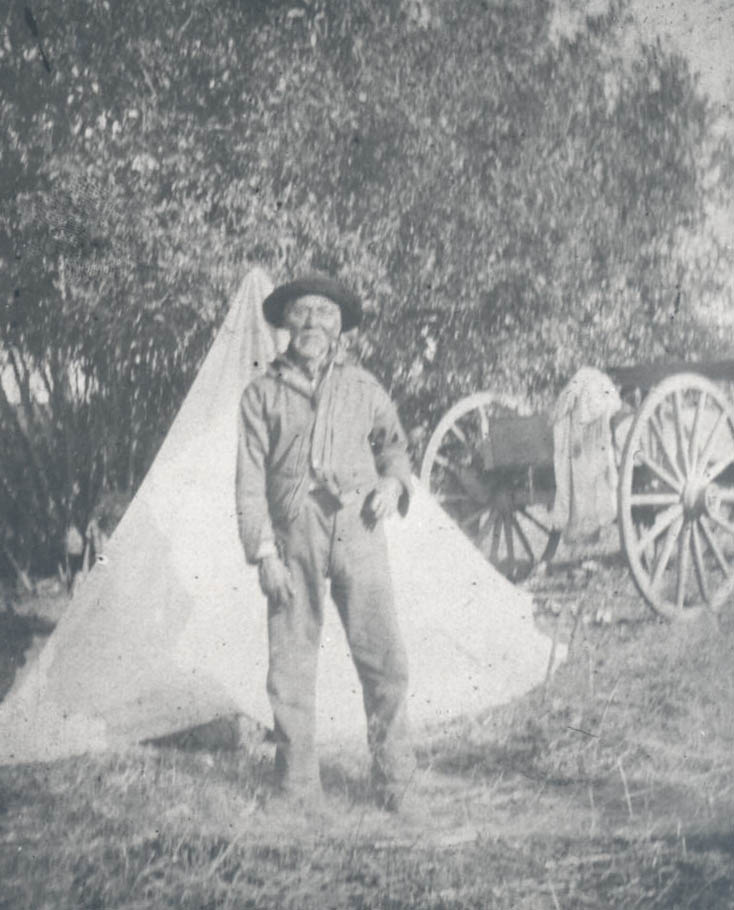
"Chief Halo (Halito). Courtesy Oreg. Hist. Soc. Research Library, 022580"
A local reminder of enduring Native presence remains in the story of Chief Halo (Halito), a leader of the Yoncalla Kalapuya who remained in his traditional homeland even as removal policies pushed many Native people onto reservations. In the 1860s, he entered into a working arrangement with settler John Walker on the Row River, about four miles east of present-day Cottage Grove, where they used a fish trap and alternated days taking salmon, trout, and eels. The story matters not simply because it places a Native leader near Cottage Grove, but because it shows Native people continuing to live, work, and maintain ties to this place well into the settlement era rather than disappearing from it. Chief Halo remained active in the region until his death in 1892.
Cow Creek’s history says settlers brought smallpox, measles, and other illnesses; over-hunted game; ruined camas fields with cattle; let hogs consume acorns and other staple foods; and fenced lands in ways that blocked Indigenous burning practices. Oregon Encyclopedia’s history of the Kalapuya Treaty also says Kalapuyans faced growing harassment and encroachment before treaty and removal.
For this region, dispossession was not limited to one people. Cow Creek’s 1853 treaty ceded more than 700 square miles of southwestern Oregon. The Yoncalla chiefs signed the Treaty with the Umpqua and Kalapuya in 1854, and the Kalapuyans ceded nearly the entirety of the Willamette Valley in 1855. The Kalapuyans and Molalas were then forcibly removed to Grand Ronde during the winter of 1855–1856, while many Cow Creek people fled deep into the mountains to survive.
In Bohemia, the core historical picture is a lode-mining district built around veins, lode mines and prospects, adits, underground workings, and stamp mills. In practice, that kind of mining landscape was created through road building, timber cutting, blasting, ore crushing, and the accumulation of waste rock and tailings.
Mining has long carried environmental risks, especially in sensitive headwaters landscapes like Bohemia. While Bohemia was not heavily shaped by hydraulic mining in the way some other mining regions were, hydraulic mining is still important to understand because of the damage it could cause. The use of high-pressure water to wash away hillsides and streambanks often led to severe erosion, muddy waterways, damaged fish habitat, and major disruption to surrounding ecosystems. In Bohemia, the environmental concerns were more often tied to roads, timber cutting, tunneling, mills, tailings, and waste rock, but the broader history of mining still shows why ecological responsibility, careful stewardship, and safe practices matter.
To tell the Bohemia story honestly is to remember that these mountains and the valley mattered long before gold. Native peoples lived with, used, and cared for this land across generations, and settlement and mining changed both the human story and the ecology of the region. Spirit of Bohemia Mining Days shares that history in a spirit of respect, honesty, and continued learning.